
A parkour jam is a gathering where people train together, explore movement, and share ideas. It can be a casual afternoon at local spots or a full weekend with workshops, challenges, competitions, and time to hang out. Beginners belong alongside experienced athletes, with each person finding challenges that fit their ability.
In this guide
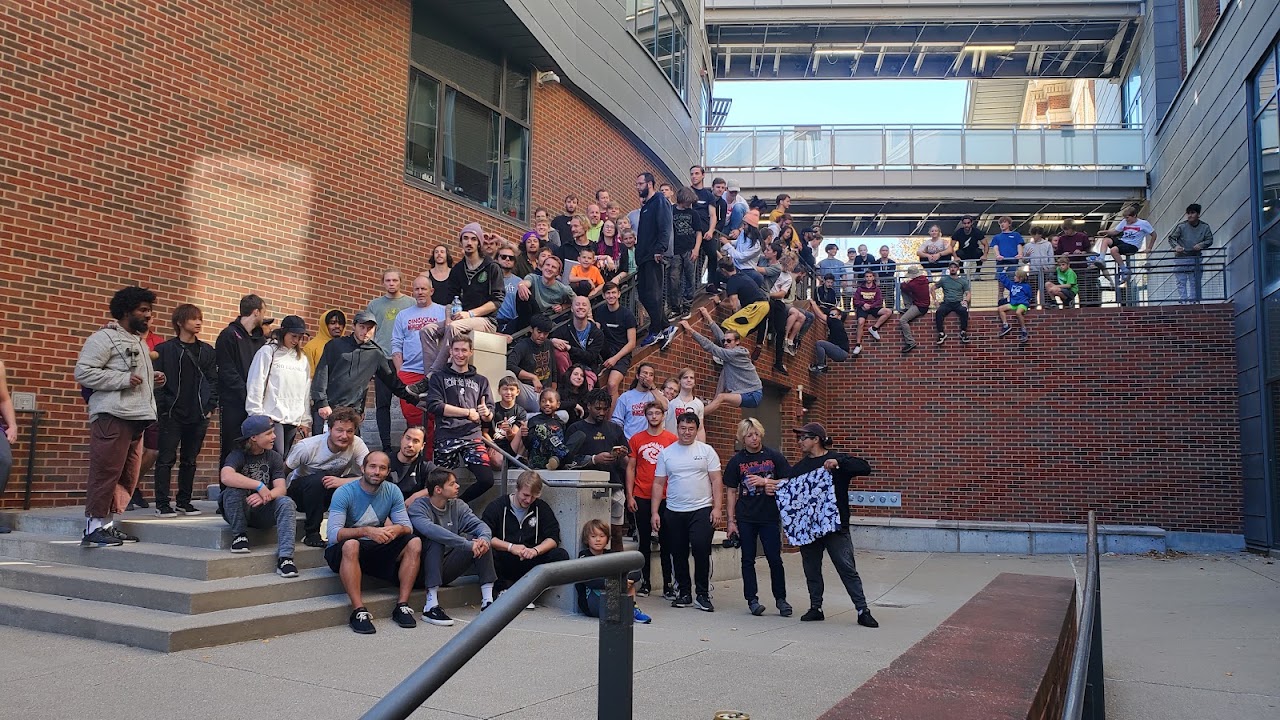
Whether you’re an adult starting parkour, a teen developing your own style, a longtime student, or a parent exploring it with your child, CincyJam is a chance to meet the wider community behind the movements you practice at Swift Movement Studio.
What to know before your first jam:
- You can take part without advanced skills or entering a competition.
- Outdoor training gives you opportunities to adapt familiar skills, read different environments, and find your own routes.
- A jam can mix open training, instruction, and social time; check what each session offers.
- Come on your own, meet a classmate, or bring your family; choose sessions that fit your experience and interests.
- CincyJam brings parkour and tricking communities together here in Cincinnati.
From city meetups to movement festivals
Parkour jams grew out of a simple idea: meet in a city, show each other your favorite training spots, and spend time moving together. Someone local knew a good wall or set of rails. Visitors brought different techniques and fresh ideas. An ordinary spot became a place to learn from one another.
That informal spirit is still part of jam culture, including weekends built around shared couches, floor space, and a lot of training. The term also covers much larger events with organized programming.
Norway’s Oslo Movement Festival grew from its organizers’ weekend gatherings into a multi-day festival. MOVE NYC has advertised workshops from beginner to expert, children’s sessions, and space to watch and relax. Different sizes and schedules, with the same opportunity to connect through movement.
Other examples include Join or Die in Boston, hosted by The Commons, and Beast Coast in Washington, DC, documented in American Parkour’s event archives. These gatherings show how far the tradition of meeting up to train has spread.
You don’t need to travel across the world to experience that community. CincyJam brings it to our own city.
What do you actually do at a jam?
Think of a jam as shared practice with room to explore. There may be a meeting place and schedule, but during open training, everyone doesn’t have to follow one course or perform the same movement. Small groups can form around different interests, and you can spend time on a challenge that makes sense for you.
At an outdoor session, the group might gather at a “spot”: a place with features suitable for training, such as low walls, steps, or rails. After introductions, a warm-up, and checking the surroundings, people begin finding things to work on. Someone might practice balance while a few others explore different ways over a low wall. You might join a group, ask about a movement, or work on your own variation nearby.
Conversation is part of the practice. “How did you place your foot?” or “Could we start from here instead?” can turn a solo attempt into a shared puzzle. There’s time to rest, watch, swap ideas, and try again. The schedule may then bring everyone together for a workshop or move the gathering to another spot.
How is a jam different from a class or competition?
In a class, a coach plans the lesson, gives progressions, and guides the group. In an open jam session, you usually have more responsibility for choosing what to practice and when to take a break. An experienced participant may offer a useful idea, but being around experienced athletes doesn’t mean you have an assigned coach. If you want instruction, look for an actual workshop or coached session on the schedule.
A competition has defined tasks, rules, and a way to score performances. Some jams include competitions, but attending the jam doesn’t automatically mean competing. You can enjoy a workshop, train with other people, and watch a competition without making a result your goal for the weekend.
A jam can also happen indoors. The word describes people gathering to move together; the setting and amount of structure vary. That flexibility is why two events called “jams” can feel quite different while sharing the same community spirit.
What happens at CincyJam?
CincyJam combines instructional workshops, open training, and opportunities to explore parkour spots around Cincinnati with a larger group. We also partner with Queen City Tricking, bringing the parkour and tricking communities together for a broader movement gathering.
The mix changes from year to year. Past editions have included speed competitions, skill competitions, and video bounty challenges. Those are examples of what a jam can contain, rather than a fixed checklist for every edition.
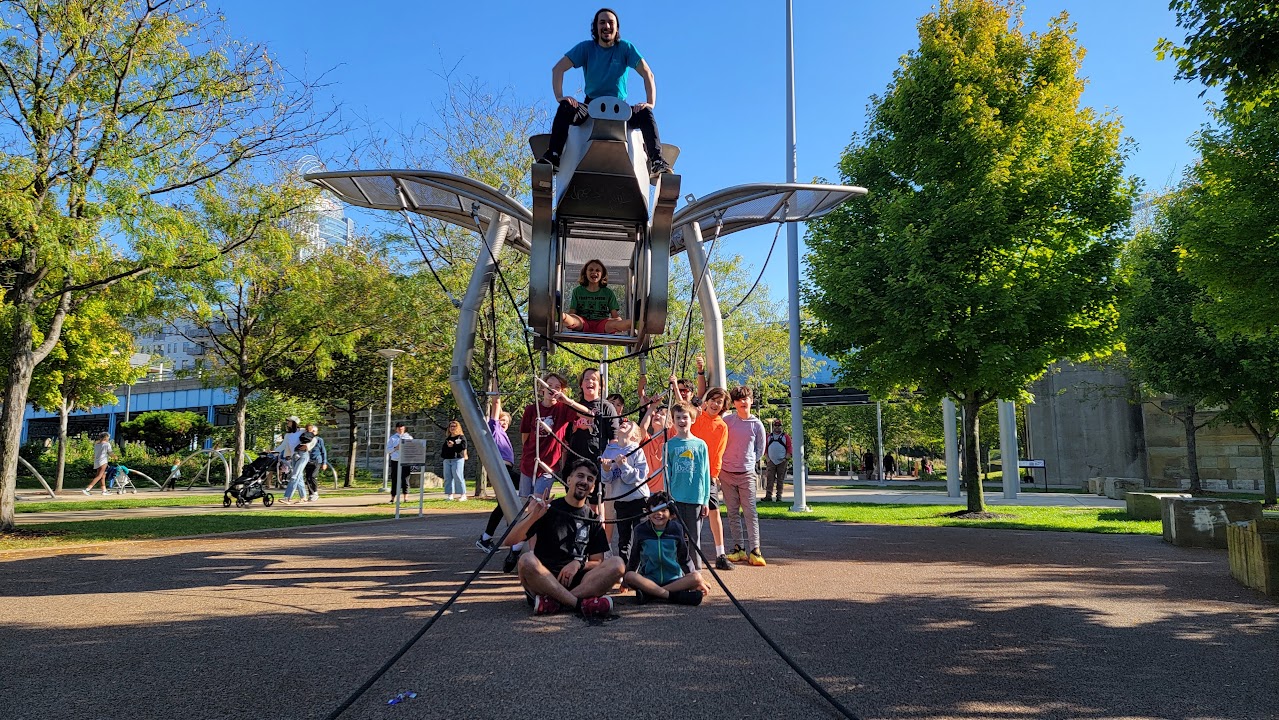
You might spend one session learning a technique, another exploring an outdoor spot, and some time watching athletes approach challenges in ways you hadn’t considered. The people around you can range from complete beginners to movers with more than 15 years of experience.
That range is part of the value. People bring different strengths, interests, and ways of seeing the same space.
What outdoor parkour adds to indoor training
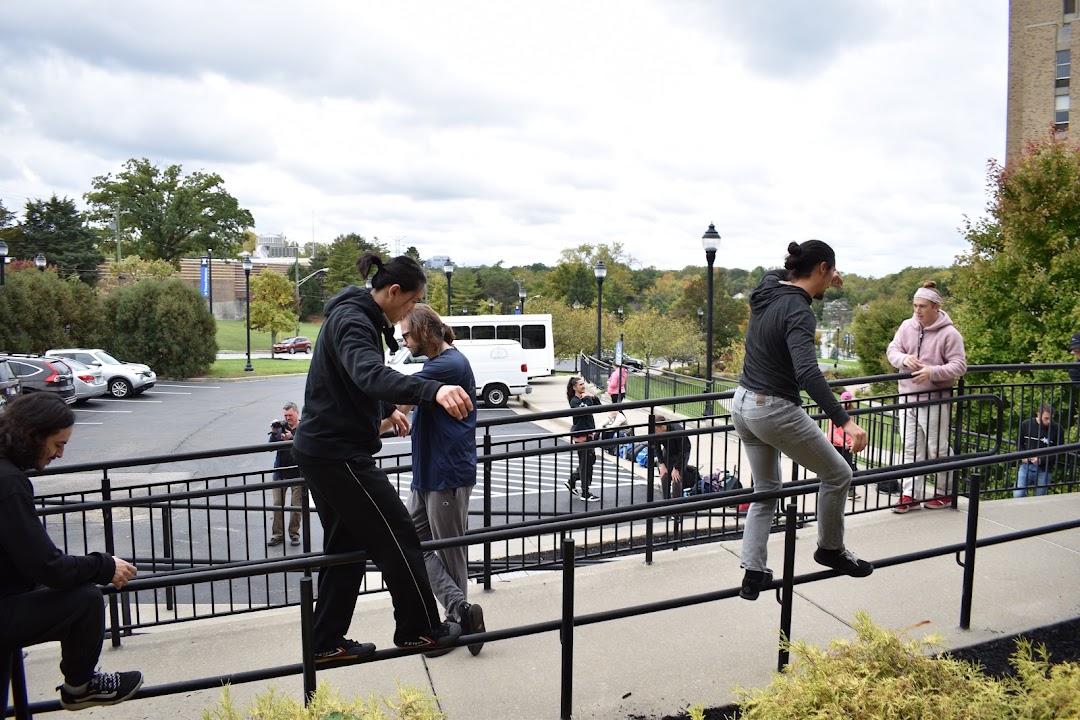
Exploring balance together at CincyJam, October 2023.
At Swift, indoor training gives us a place to teach fundamentals, arrange challenges, and practice progressions with coaching. Repeating a movement in a familiar setup helps you work on specific details. You can focus on your takeoff, hand placement, or landing without having to figure out a completely new environment each time.
Outdoor practice adds another part of parkour: learning how to use those skills in spaces that weren’t designed as a lesson. The two settings complement each other. Class gives you tools to work with; outdoor training asks you to decide which tools fit the situation.
Apply a skill when the setup changes
A vault you’ve practiced over a gym block may feel different at a low outdoor wall. The top might be wider, the approach shorter, or the ground slightly uneven. Even if the obstacle looks familiar, you need to look at it again and choose an appropriate starting point.
That creates an opportunity to understand the movement beyond one setup. Where can your hands go? Is there room to step down? Would walking through a simpler version help you get familiar with the space? You may choose a smaller challenge than the one you do indoors, and still learn something useful.
The goal is adaptable movement: being able to make thoughtful adjustments when the environment changes.
Practice reading the environment
Outdoors, assessing the space is part of the activity. Before moving, you need to consider the surface, stability of the obstacle, landing area, weather, and other people nearby. A wall that looks inviting from a distance might have a loose cap or a wet landing that makes it unsuitable today.
A useful question to ask yourself or a coach is: “What do we need to check before we use this?” You get to practice noticing details and making a choice, including choosing another spot or leaving an obstacle alone. For younger students, talking through that decision with a coach or parent makes the process easier to understand.
Familiar gym skills don’t automatically transfer to every outdoor surface. Start with low, manageable options and seek instruction when you’re unsure how to assess or approach a challenge.
Find your own movement challenges
An outdoor space rarely comes with a start line and instructions. You get to ask questions: Can I balance along this low edge? Can I move through this space smoothly? What changes if I use a different foot or approach from another direction?
This opens up creative challenges without requiring bigger jumps or more height. A few suitable features can offer many possibilities when you change the route, pace, or movement. Training with others multiplies those ideas: someone else may spot an option you walked past several times.
See Cincinnati through a different lens
A jam gives you a reason to explore parts of the city with people who know them. A place you would normally pass through can become somewhere you spent an afternoon solving a movement puzzle and meeting new friends.
That also comes with responsibility. Public spaces are shared, and an interesting obstacle isn’t automatic permission to train on it. Follow local rules and organizer guidance, give other users plenty of room, avoid damaging surfaces, and leave the spot clean. Taking care of a place is part of being welcome there again.
Back at Swift, those outdoor experiences can give your training more direction. You may want to improve a controlled landing, get more comfortable balancing, or ask a coach how to build toward a movement you saw. Indoor and outdoor practice can keep informing each other.
Why attend when you already take classes?
Meet people beyond your usual class
Weekly classes give you familiar faces and a regular place to practice. A jam widens that circle. You can meet students from other class times, local athletes, and visitors who share your interest in movement.
An introduction can be as simple as asking, “What are you working on?” You might find someone who enjoys the same kind of balance challenge or creative route, or meet someone whose approach is completely different from yours.
There’s a bigger possibility here: parkour can become something you share with people beyond a scheduled lesson. You have names and faces to look forward to seeing at the next gathering, and people to ask about their progress. For parents, meeting other families can make attending future events feel more familiar, too.
The Commons, which hosts Join or Die in Boston, describes connection with people, new influences, and places as central to the experience of a parkour jam. That captures an important reason to attend even if you don’t leave with a new trick.
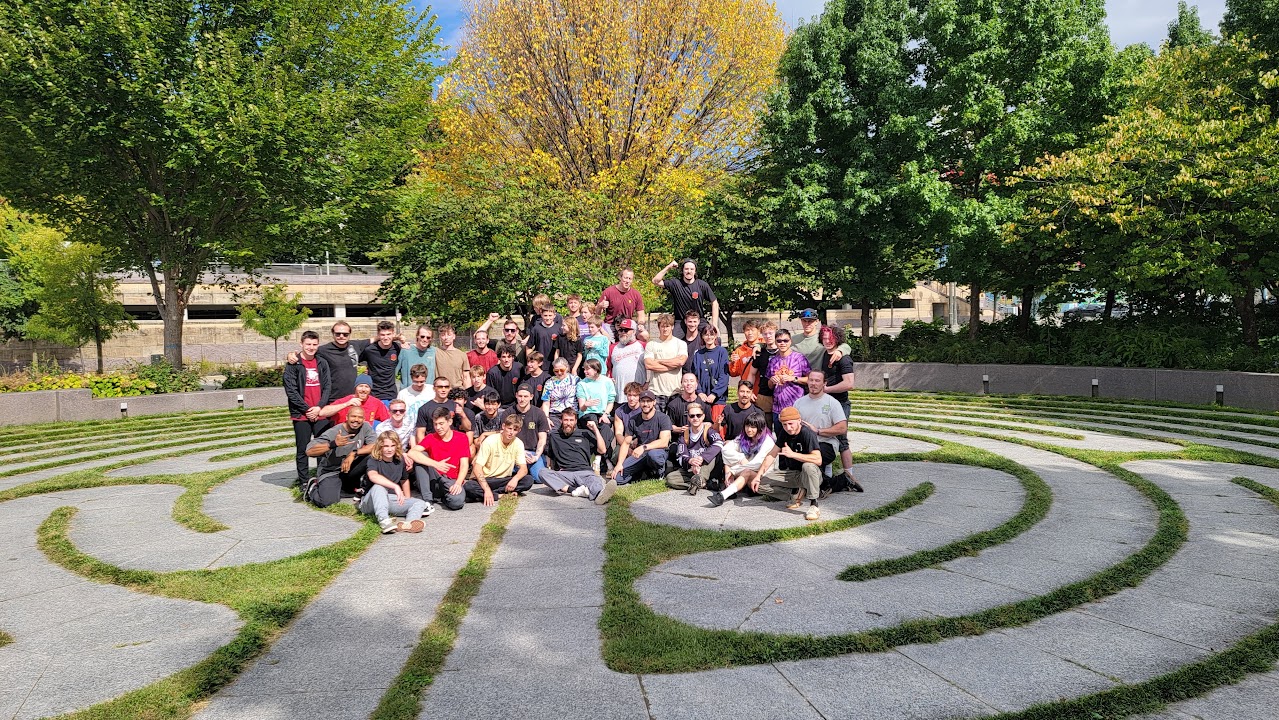
Make room for play in your adult life
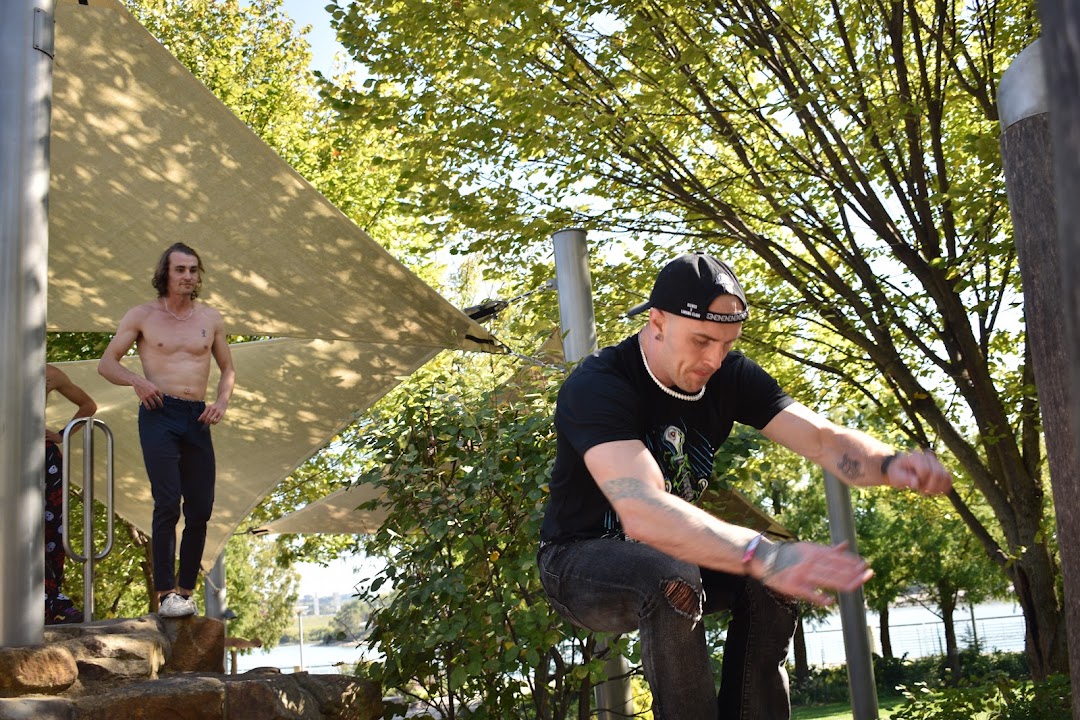
Making time to move outdoors at CincyJam, October 2023.
If you started parkour as an adult, a jam can be a chance to spend an afternoon following your curiosity. You can work on a small movement puzzle, try a different approach, and enjoy the conversation around it. You get to choose what interests you and how much energy you want to put into the session.
You may also find people who understand what it’s like to fit training around work, family, and other responsibilities. A shared interest gives you a natural starting point for conversation, even when you arrive alone. Introduce yourself, ask what someone is practicing, and see where the exchange goes.
Starting as an adult doesn’t require catching up with people who began as kids. Your goals can be your own: move with more control, explore a new spot, enjoy a creative challenge, or find people you’d like to train with again.
Learn from people who move differently
Imagine a low wall. One person practices a controlled step over it. Another works on a vault. A third connects it with nearby obstacles to build a longer sequence.
They can share the space while working on different goals. A jam gives you a chance to notice those possibilities and ask questions.
One athlete may enjoy efficient routes, another careful balance, and another playful combinations. Seeing that variety can help students discover what they enjoy and give experienced members a fresh direction when practice starts feeling repetitive.
For Swift students, the approach remains familiar: start with foundations and choose a manageable next step. Our level band system explains how we build that habit in class. Bring interesting ideas back to your coach to work out which progressions fit your current abilities.
See the practice behind the impressive movement
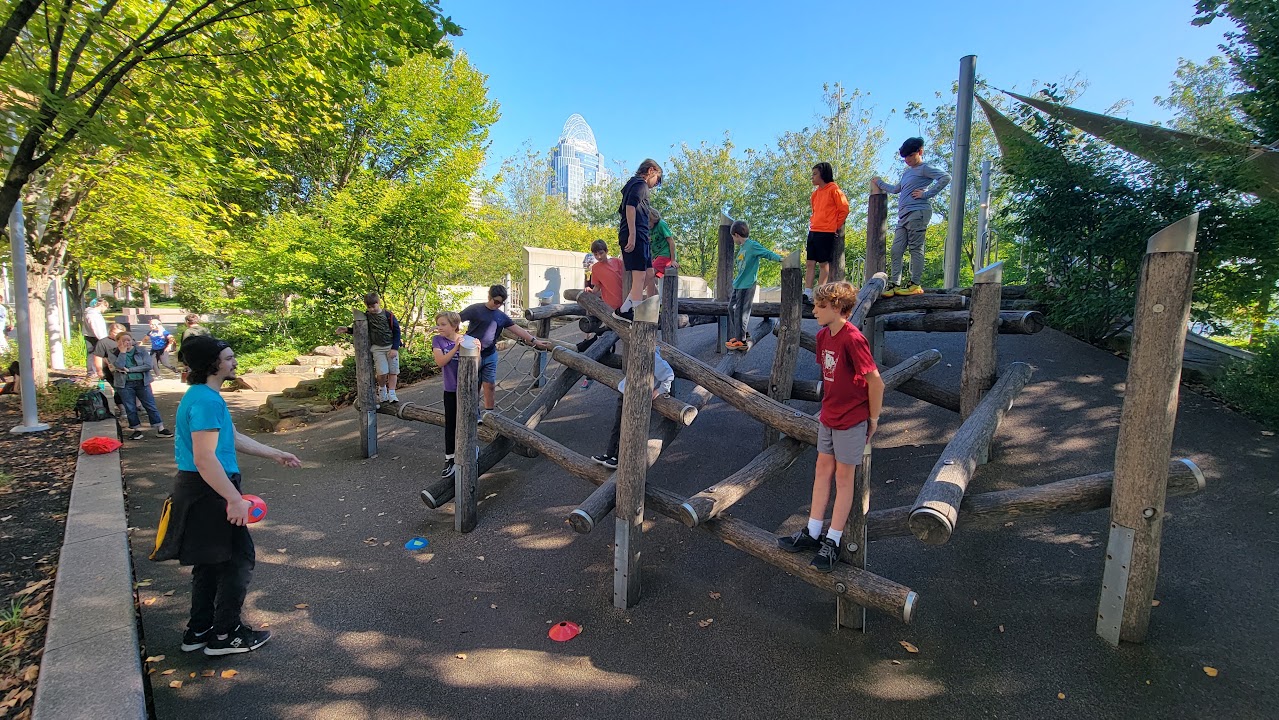
A highlight video shows a finished skill. Training alongside others gives you a chance to see the attempts, adjustments, rests, and decisions that go into it.
Pay attention to the process: Which smaller step helped someone improve? How did they adjust after an attempt? When did they decide to take a break or change the challenge? Those observations can inform your own practice, and give parents something useful to discuss with younger students.
Those are things worth celebrating alongside a new skill.
Be part of someone else’s progress
You don’t have to be the most experienced person at a spot to add something. You can welcome a newcomer, give someone room to finish an attempt, or recognize the effort they put into a small improvement. If you have an idea to share, ask whether they want a suggestion first.
A beginner who asks a thoughtful question can get the whole group looking at a challenge differently. An experienced member can model patience and good judgment. A parent can notice and celebrate the moment a child chooses a sensible progression instead of trying to keep up with someone else.
These interactions are how a welcoming community gets built. Each person has a chance to help make the next person feel comfortable joining in.
Do beginners really belong at a jam?
Yes. You can arrive with a small goal: meet someone, try a beginner session, or find a comfortable challenge to practice. You don’t need a flip or a competition result to contribute.
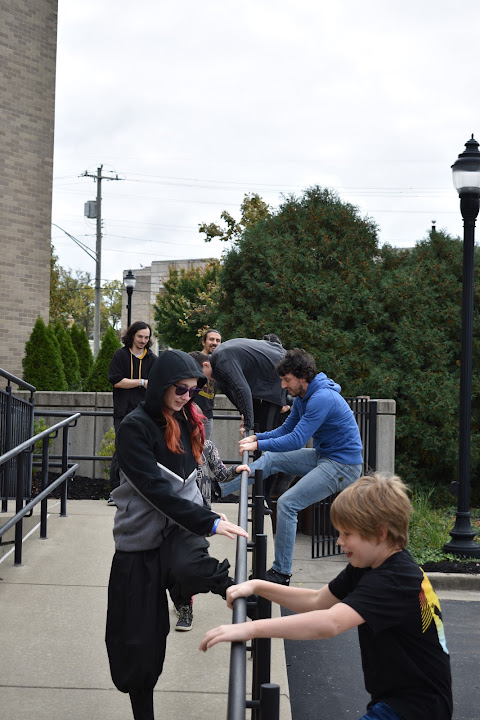
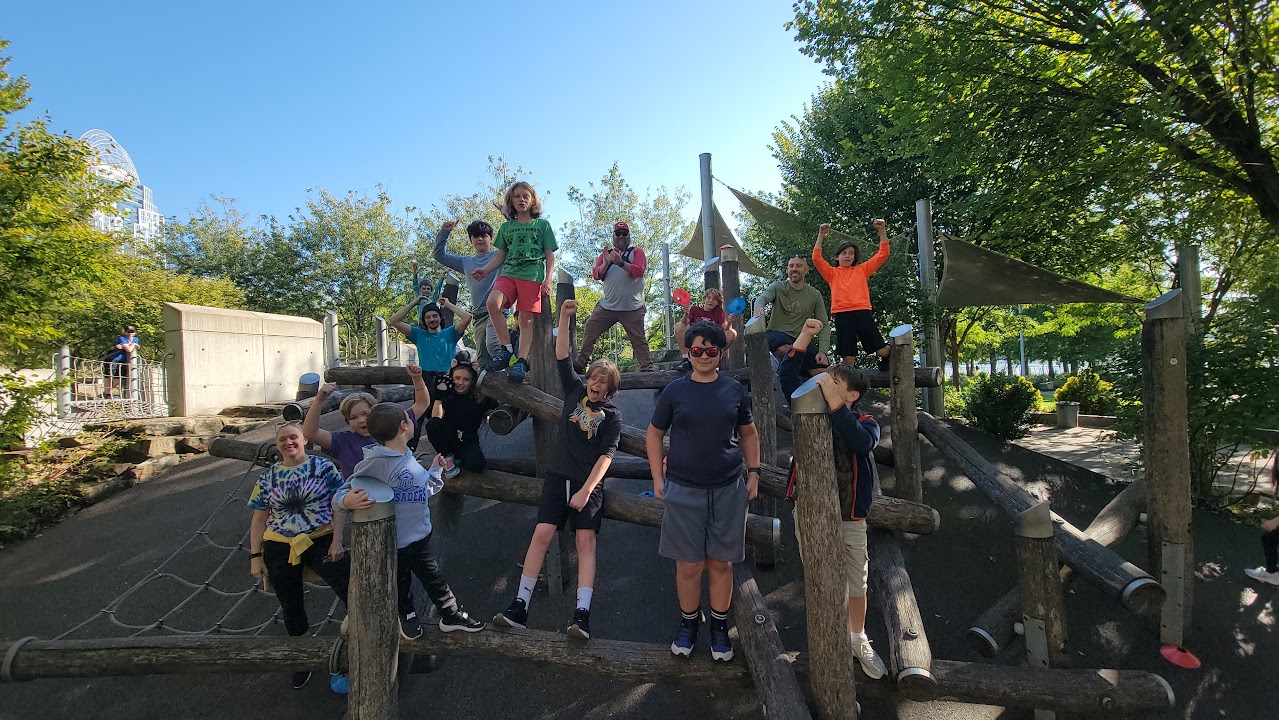
Sharing an outdoor training spot at CincyJam, October 2023.
If a big group feels intimidating, arrange to meet a classmate and start with an instructed session. Tell the coach you’re new to jams and would like help finding a starting point. Watching for a while is also a reasonable way to get comfortable.
It helps to arrive with a simple introduction: “I train at Swift, and this is my first jam.” Ask an organizer where your session meets, then introduce yourself to someone nearby. You don’t need to join every conversation or spend the entire day training to have a worthwhile experience.
If you’re new as an adult or returning after time away, tell the workshop coach where you’re starting. Choose sessions that suit your current experience, set your own pace, and leave room to rest. You can have a rewarding day without matching anyone else’s training volume or attempting their hardest movement.
If you’re wondering whether your child is ready, ask their Swift coach which parts of the event would be a good fit. Skill level, comfort in a group, ability to follow directions, and the supervision available all matter. A welcoming event can still have individual sessions with different requirements.
For 2026, CincyJam’s registration page lists a free beginner outdoor workshop led by Swift coaches for students and family members, with no experience required. It also lists free spectator admission and a 20% Swift member discount; members should check their email for the code. Workshops are booked separately from event passes, including claiming the free beginner session. Check the CincyJam registration details when choosing your activities.
How to make your first jam a good experience
Choose one or two things you’d enjoy: meet someone, learn a movement, or explore an outdoor spot with the group. Having a starting point helps, while leaving enough room to follow an interesting conversation or challenge.
- Pack for the day. Bring water, snacks, comfortable training shoes, and clothing suited to the weather.
- Plan your route and breaks. Check where your chosen sessions meet and how you’ll get between locations. Follow organizer directions, keep walkways clear, and respect other people using the space.
- Choose challenges you can control. Being near someone experienced doesn’t make their movement the right next step for you. Ask for help, choose a smaller progression, and stop when tired.
- Make room for others. Give people room to train, ask before offering advice, and get permission before filming someone.
- Start with a manageable schedule. A workshop and time to train or meet people may suit you better than doing every activity. Check pass options and session requirements as you plan.
Coming with your child?
Choose a goal together. Talk beforehand about what your child would enjoy: learning one new thing, meeting a fellow student, or exploring a new spot.
Plan supervision and travel. Open training has a different structure from an instructed class. Confirm age and guardian requirements with the organizers, plan travel between locations, and help your child choose appropriate challenges and take breaks.
Join in your own way. Watch, meet other families, cheer on thoughtful effort, or join an appropriate beginner session yourself. Celebrate the decisions your child makes as well as the skills they try.
Bring the experience back to Swift
After the jam, take a moment to reflect. If you attended with your child, talk through these questions together:
- Who did you meet?
- What surprised you?
- What would you like to work on next?
A new idea can become a class goal. A conversation can become a training friendship. Showing up gives you a chance to help build the community, too: introduce yourself, make room for someone new, and celebrate another person’s progress.
Related reading:
Come be part of CincyJam
Meet other movers, explore Cincinnati, and find a challenge that fits where you are today. Bring your curiosity, and invite a Swift classmate to join you.
Choose your pass and workshop sessions at swift-movement.com/jam. Swift members: check your email for your member discount before registering.